

Pterosaur RC VTOL — FAQ
Straight answers about RC VTOL, tiltrotor hover-to-fly, and Pterosaur RC VTOL — Electron Flight’s ready-to-fly tiltrotor (we just call it Pterosaur). Price is $65 with free shipping.
Jump to a question
- What is an RC VTOL?
- How does HOVER vs FLY work?
- How hard is Pterosaur to fly?
- Is Pterosaur beginner-friendly?
- Does Pterosaur use servos or tilt actuators?
- How big is Pterosaur?
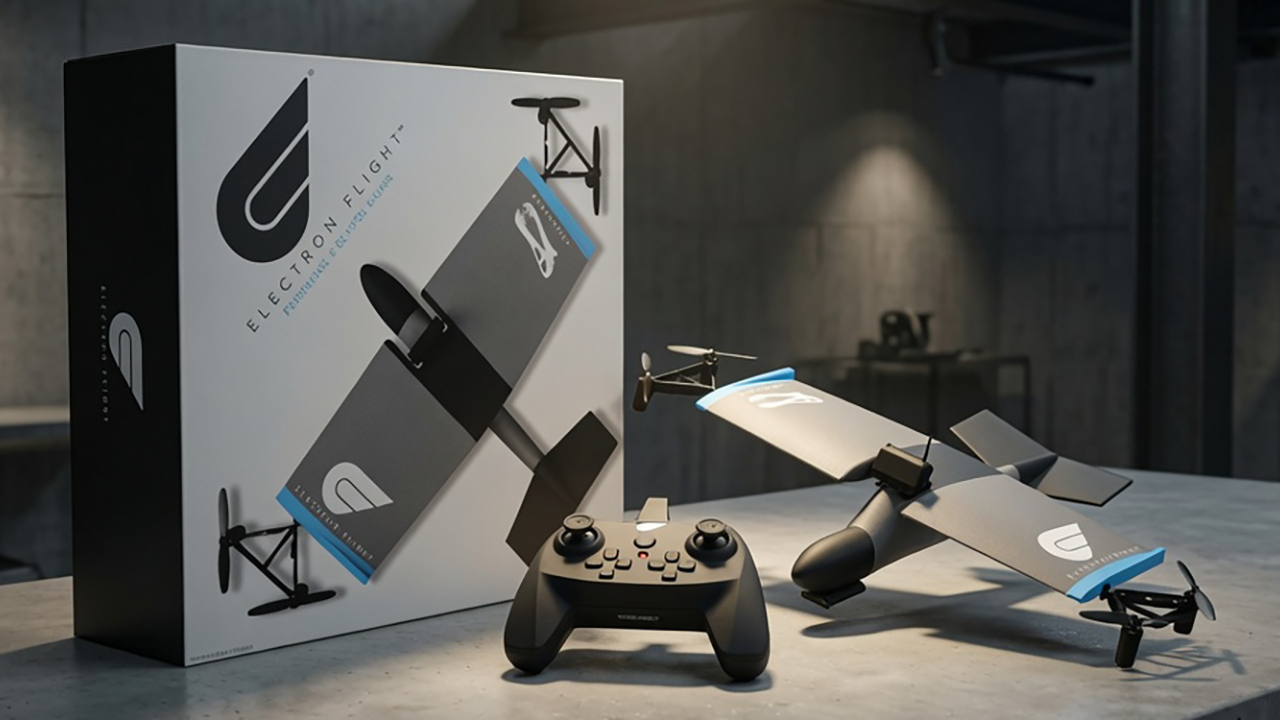
- What’s in the box?
- How much does Pterosaur cost, and is shipping free?
- What type of battery does Pterosaur need?
- What batteries does the remote need?
- What remote controller is included?
- Is Pterosaur ready to fly out of the box?
- Where can I fly Pterosaur?
- Are spare propellers included?
- Is a user manual included?
- What about returns?
- FCC IDs?
- Is this the same as toy “Pterosaur” gliders online?
- How is Pterosaur different from a toy quadcopter?
- Who is Pterosaur for?
- RC VTOL explained (longer guide)
What is an RC VTOL?
An RC VTOL (Vertical Take-Off and Landing) aircraft combines multirotor-style hover with airplane cruise. You lift off vertically, then transition into efficient forward flight — no runway required. That is why hobbyists search for an RC VTOL, VTOL RC plane, or RC tiltrotor when they want park flying without a runway.
A tiltrotor is one common RC VTOL layout: the thrust line reorients between hover and wing-borne flight. Many hobby VTOL RC planes use servo-driven tilt mechanisms or complex linkages; others are toy-grade “plane-shaped” quads that never truly cruise like a plane.
Pterosaur RC VTOL is a mechanically simple radio-controlled tiltrotor built around Electron Flight PTERO (Passive Tilt Electric Rotor) technology. Push-button HOVER ↔ FLY on the included Mode 2 transmitter; no servos or tilt actuators on the airframe. HOVER works indoors; FLY is outdoor only.
Looking for the product page? Shop Pterosaur.
How does HOVER vs FLY work?
In HOVER, Pterosaur lifts off and stays like a multirotor — great for learning indoors or in a small outdoor space. In FLY, it transitions into wing-borne forward flight for more efficient cruise. Use FLY outdoors only. The included Mode 2 remote labels the HOVER and FLY controls so the VTOL transition is easy to find.
How hard is Pterosaur to fly?
It is computer-stabilized with a standard Mode 2 transmitter. Start in HOVER to learn; move to FLY outdoors once you are comfortable. Recommended for ages 14 and up with adult supervision for younger pilots.
Is Pterosaur beginner-friendly?
Yes for pilots who already know (or want to learn) Mode 2 sticks. Computer-assisted stability helps in HOVER, so you can practice takeoff and landing before trying outdoor FLY. It is not a toy drone with one-button auto flight — it is a real RC VTOL plane with sticks.
Does Pterosaur use servos or tilt actuators?
No. Pterosaur uses Electron Flight PTERO passive-tilt design — no servos, linkages, or control surfaces on the airframe. More on PTERO technology.
How big is Pterosaur?
Aircraft dimensions are 440 mm × 300 mm (about 17.3 × 11.8 in). The packaged box is 37 cm × 37 cm × 12 cm (about 14.5 × 14.5 × 4.7 in) and weighs about 650 g.
What’s in the box?
- 1× Pterosaur
- 1× Remote Controller (Mode 2)
- 2× 3.7V 500mAh LiPo Batteries
- 4× Extra Propellers
- 1× User Manual
Note: the remote needs 4 AA batteries (not included).
How much does Pterosaur cost, and is shipping free?
Price is $65.00. Shipping is FREE.
What type of battery does Pterosaur need?
Pterosaur uses 3.7V 500mAh LiPo batteries. Two are included so you can fly one while the other charges. Charge time is about 100 minutes with the included USB charger; flight time is typically under 10 minutes per battery.
What batteries does the remote need?
The included remote requires 4 AA batteries. They are not included in the box — install them in the rear battery compartment before binding and flying.
What remote controller is included?
A dedicated 2.4 GHz Mode 2 transmitter is included, with labeled HOVER and FLY controls for the VTOL transition. Power it with 4 AA batteries (sold separately).
Is Pterosaur ready to fly out of the box?
Yes — it is ready-to-fly once you charge an aircraft LiPo, install 4 AA batteries in the remote, and complete the quick bind steps in the user manual. No assembly of the airframe is required.
Where can I fly Pterosaur?
Use HOVER indoors or in a clear outdoor space. Use FLY outdoors only, in open areas away from people and property, and always keep the aircraft in line of sight. Follow local rules for small RC aircraft / toy drones where you fly.
Are spare propellers included?
Yes. Four extra propellers ship with Pterosaur. Swap damaged props before the next flight — keep spares in the box for field replacements.
Is a user manual included?
Yes. A user manual is included in the box. You can also read the Pterosaur User Manual online.
What about returns?
See the Return Policy before you buy for current return terms. (Shipping is free on purchase — see the price FAQ above.)
FCC IDs?
Aircraft FCC ID: 2BV6L-PTEROSAUR · Controller FCC ID: 2BV6L-PTEROSAURTX. See also the FCC Compliance Statement.
Is this the same as toy “Pterosaur” gliders online?
No. This is Electron Flight’s FCC-listed Pterosaur RC VTOL — a radio-controlled tiltrotor with HOVER ↔ FLY, not a foam glider or toy quad that reuses the dinosaur name.
How is Pterosaur different from a toy quadcopter?
Many “plane-shaped” toys are still multirotors in disguise. Pterosaur is a true RC VTOL tiltrotor: vertical takeoff, then wing-borne forward flight in FLY mode, with no servos on the airframe thanks to PTERO passive tilt.
Who is Pterosaur for?
- Pilots who want a compact VTOL RC plane for park flying without a runway
- Beginners who prefer computer-stabilized Mode 2 controls
- Hobbyists curious about a servo-free tiltrotor / PTERO demo at this price
RC VTOL explained
If you are new to the category, this longer note expands on the short What is an RC VTOL? answer above.
What “RC VTOL” means in practice
RC VTOL means a radio-controlled aircraft that can take off and land vertically, then fly forward more like a plane. In hover you get multirotor-style control. In forward flight the wing carries more of the load, so the model can cruise farther and faster than a similarly sized quad for the same battery. No runway is required for takeoff or landing.
People searching for an RC VTOL, VTOL RC plane, or RC tiltrotor usually want that mix: backyard or park takeoff, plus real forward flight — not a foam glider and not a toy that only looks like a plane.
Common RC VTOL layouts
Hobby VTOL designs vary. Some use servo-driven tilt nacelles or complex linkages. Some are “tailsitters” that pitch from vertical to cruise. Others are plane-shaped multirotors that never unload the rotors onto a wing. A tiltrotor RC VTOL reorients thrust between hover and wing-borne flight so one airframe can do both jobs.
Pterosaur is that last kind: a compact radio-controlled tiltrotor built around Electron Flight PTERO (Passive Tilt Electric Rotor) technology. The Mode 2 transmitter labels HOVER and FLY so the transition is obvious. There are no servos or tilt actuators on the airframe.
HOVER vs FLY (why both modes matter)
HOVER is for vertical lift, learning, and tight spaces — including indoors when you have room. FLY is outdoor wing-borne cruise. Keeping those modes clear is what separates a true RC VTOL from a quad that only pitches forward while still flying as a multirotor.
Who an RC VTOL is for
An RC VTOL suits pilots who want park flying without a runway, Mode 2 stick practice with computer-assisted stability, or a simple way to see tiltrotor / PTERO behavior without a large, expensive airframe. If you only want a camera drone with GPS missions, a consumer quad is a better fit. If you want hover plus airplane-style cruise in one small RTF model, that is the RC VTOL use case Pterosaur is built for.
Myths worth skipping
- Plane-shaped does not automatically mean VTOL — many toys are still quads.
- VTOL does not require a runway, but FLY still needs open outdoor space.
- A dinosaur-named foam glider online is not the same as Electron Flight’s FCC-listed Pterosaur RC VTOL.
Ready for product details? Shop Pterosaur · User manual · Store